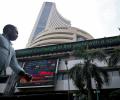
Like with all great crashes, some had noticed the cracks. "... cash balances (of banks) seem, from the available indications, to be hopelessly inadequate; and it is hard to doubt that in the next bad times they will go down like ninepins. If such a catastrophe occurs, the damage inflicted on India will be far greater than the direct loss falling on the depositors," said John Maynard Keynes in his May 1913 work "Indian Currency and Finance", written before his path-breaking work in macroeconomics laid the foundation of dealing with global crises.


Brokerages expect a further slowdown in Indian firms' revenue and earnings growth in Q4FY25, following low single-digit growth in the preceding three quarters, as factors like weak consumer demand and credit growth linger on.

Companies may foot less of the tax bill for some time yet. The corporate share of net direct tax collections has been lower in 2024-25 than in previous years. The corporate segment accounted for 45.6 per cent of total net direct tax collections as of March 16, compared to 48.1 per cent on the same date in 2023-24 (FY24).

The stocks are largely from sectors such as chemicals, finance and cement, which struggled earlier but the worse seems to be behind them.

The RBI added roughly 3 tonnes in 2025, taking its gold reserves to 879 tonnes as of January 31, 2025.

Food budgets in urban areas spent less on protein as compared to beverages and processed foods, reveals the Household Consumption Expenditure survey data for 2023-24.

The share of Ahmedabad in the total value of trades on both the BSE and NSE is set to touch double digits for the third year in a row.

Foreign companies now pay less tax relative to their earnings than at any time in more than three decades. Foreign private companies paid 24.36 per cent of their pre-tax profit as tax in 2023-24, show numbers from the Centre for Monitoring Indian Economy (CMIE).

Corporate India's struggle with subdued revenue and earnings growth persisted in the October-December quarter of 2024-25 (Q3FY25). The combined net sales (gross interest earnings for lenders) of listed companies grew in single digits for the seventh consecutive quarter, while their combined net profit rose by a single digit for the third straight quarter.

The recent selloff in the Indian equity market has been far more painful for mid and smallcap stocks compared to largecap stocks. The benchmark BSE Sensex is now down 9.5 per cent from its record monthly closing of 84,300 at the end of September last year. In the same period, the BSE MidCap has lost 17 per cent of its value, while the BSE SmallCap has corrected by 17.1 per cent.

There have been 41 cases of Covid in the most recent four-week period ending mid-January, with three deaths.

'Growth for some companies has been hard to come by and this is a smart way to get there.'

10 largecaps stocks which stand to gain from the Budget.

The share of companies where it would take over 100 years for a median employee to earn the equivalent of their top executive's annual salary rose to 65 per cent in FY24 from 61 per cent in FY19.

Ambani and Adani account for a fifth of the net worth of all billionaire promoters in the country and half the combined net worth of the top 10.

Excess earnings of unlisted companies over and above their interest costs are at a record level. The interest-coverage ratio of 2.94 is the highest going back to 1990-91, according to numbers from the Centre for Monitoring Indian Economy (CMIE). The ratio measures earnings relative to every rupee to be paid as interest on outstanding debt.

The share of rent in consumption expenditure has risen to 6.58%, according to the Household Consumption Expenditure Survey 2023-2024. This is the highest it has been in surveys going back to the turn of the millennium.

Both new and completed project values as of December 2024 remain below pre-pandemic levels seen in 2019.

These 10 stocks represent the best mix of value and growth, offering relatively low price-to-earnings and price-to-book ratios, a high return on equity, and sufficiently high potential from current levels.
 © 2026 Rediff.com - Advertise with us - Disclaimer - Privacy Policy - Sitemap - Feedback - About us - Terms of use - Grievances